

Judge lets Indian man who overstayed his student visa for more than a decade STAY in Britain because his British baby daughter is still breastfed
Published 3 November 2026, 14:37
- Upper Tribunal Judge A-R Landes accepted the boy's British mother, Ms Masih, would 'not in fact leave the UK'.
- Kamal Kumar, who arrived as a student in 2009, had an asylum claim and an earlier appeal thrown out.
- Kumar's attempts to remain in the UK legally spanned more than a decade of failed applications.
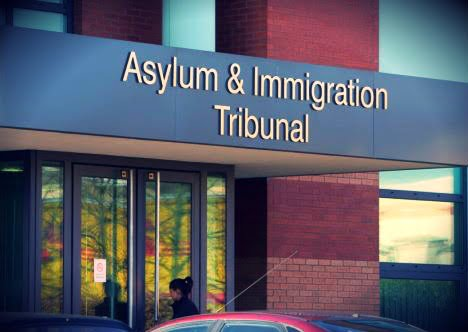
An Indian man who overstayed his student visa by more than a decade has won the right to remain in Britain after a judge ruled it would be unreasonable to separate his British baby daughter — who is still breastfed — from his mother and familiar life in the UK.
Kamal Kumar arrived in the UK in 2009 on a student visa and met his future wife, Ms Masih, a British citizen who had come to the UK from India aged 16, in January 2011.
Their relationship began in August 2011, and they started living together in February 2014 — the same year his leave to remain expired, in August 2014.
The couple married in July 2021 and their daughter, a British citizen, was born in October 2024.
Kumar's attempts to remain in the UK legally spanned more than a decade of failed applications.
His initial application for leave to remain on the basis of being an unmarried partner was submitted in December 2014 and was refused with no right of appeal.
He then claimed asylum, which was rejected in March 2020.
A subsequent application was refused in September 2021, and an appeal to the First-tier Tribunal was dismissed in May 2022, with the judge concluding that the "balance sheet proportionality assessment is firmly against him" and that there were no insurmountable barriers to his family life being maintained in India.
A further First-tier Tribunal appeal was dismissed in February 2025.
The judge concluded: "if the parents have to leave the UK, the natural expectation would be that the child would go with them."
The Upper Tribunal set aside that decision in April 2026, with President Mr Justice Lavender and Upper Tribunal Judge A-R Landes finding a material legal error.
As the Upper Tribunal put it: "There is no recognition in that paragraph, or anywhere else in the FtTJ's decision, that Ms Masih is a British citizen who cannot be required to leave the UK, so that only one of the child's parents had to leave the UK."
The Upper Tribunal also clarified the law on how much weight should be given to a relationship built while someone is in the UK unlawfully, ruling it was not an "all or nothing" matter — only those portions of the relationship developed during unlawful residence attract the "little weight" provision, while earlier periods of lawful residence can be weighed appropriately.
At the remaking hearing in June 2026, Kumar told Judge Landes that his wife "said that she was doing everything here and she would not go to India with him," and that if the child went to India with him "it would tear apart the family."
Ms Masih told the tribunal her career, her mother, her siblings and her father's grave were all in the UK: "she could not see her career in India."
Judge Landes was "satisfied that she would not in fact leave the UK if the appellant were removed."
She also dismissed the suggestion that Ms Masih had not credibly explained why she had not foreseen the immigration consequences of the relationship, writing that "young people in the excitement of entering a relationship do not typically give considered thought to the consequences."
On the child, Judge Landes ruled it would not be reasonable to separate the boy "both from his mother (who I accept still breast feeds him at times) and his familiar environment and wider family in the UK, for an unknown period," concluding: "the appellant has a genuine and subsisting relationship with his British citizen child, and it would not be reasonable to expect the child to leave the UK."
The removal decision was held to breach Article 8 of the European Convention on Human Rights, and the appeal was allowed.
Read today's full feed at The Newshound →