
Adult autism diagnoses in Britain have soared tenfold since 2010, largely driven by young women with ADHD and anxiety

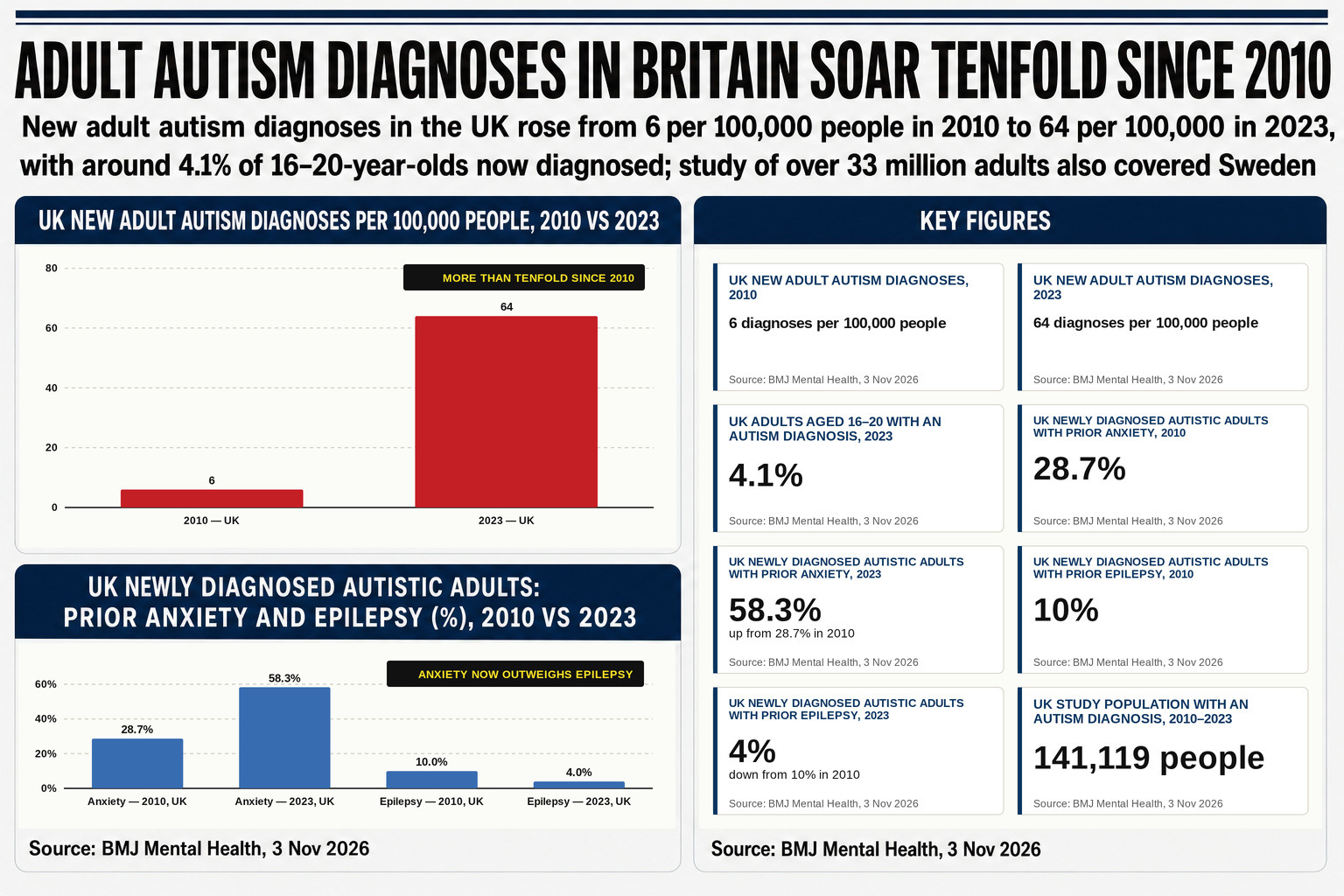
A BMJ Mental Health study drawing on health records from more than 33 million adults in the UK and Sweden found that new autism diagnoses climbed from six per 100,000 people in 2010 to 64 per 100,000 by 2023. Researchers from several British universities and Sweden's Karolinska Institute say the increase is concentrated in 16-to-20-year-olds, with roughly 4 per cent of that age group now holding a diagnosis.
Among autistic adults, those who had previously been diagnosed with anxiety more than doubled in share, rising from 29 per cent to 58 per cent between 2010 and 2023.
Epilepsy and intellectual disability as co-occurring conditions declined sharply, giving way to ADHD, depression, eating disorders, chronic fatigue and sleep disorders.
Some experts attribute the shift to 'cultural changes' in how autism is defined, while others contend it reflects improved recognition of the condition.