Anthropic admits Houthi-linked cell used Claude AI to engineer ballistic missiles and self-correcting rockets
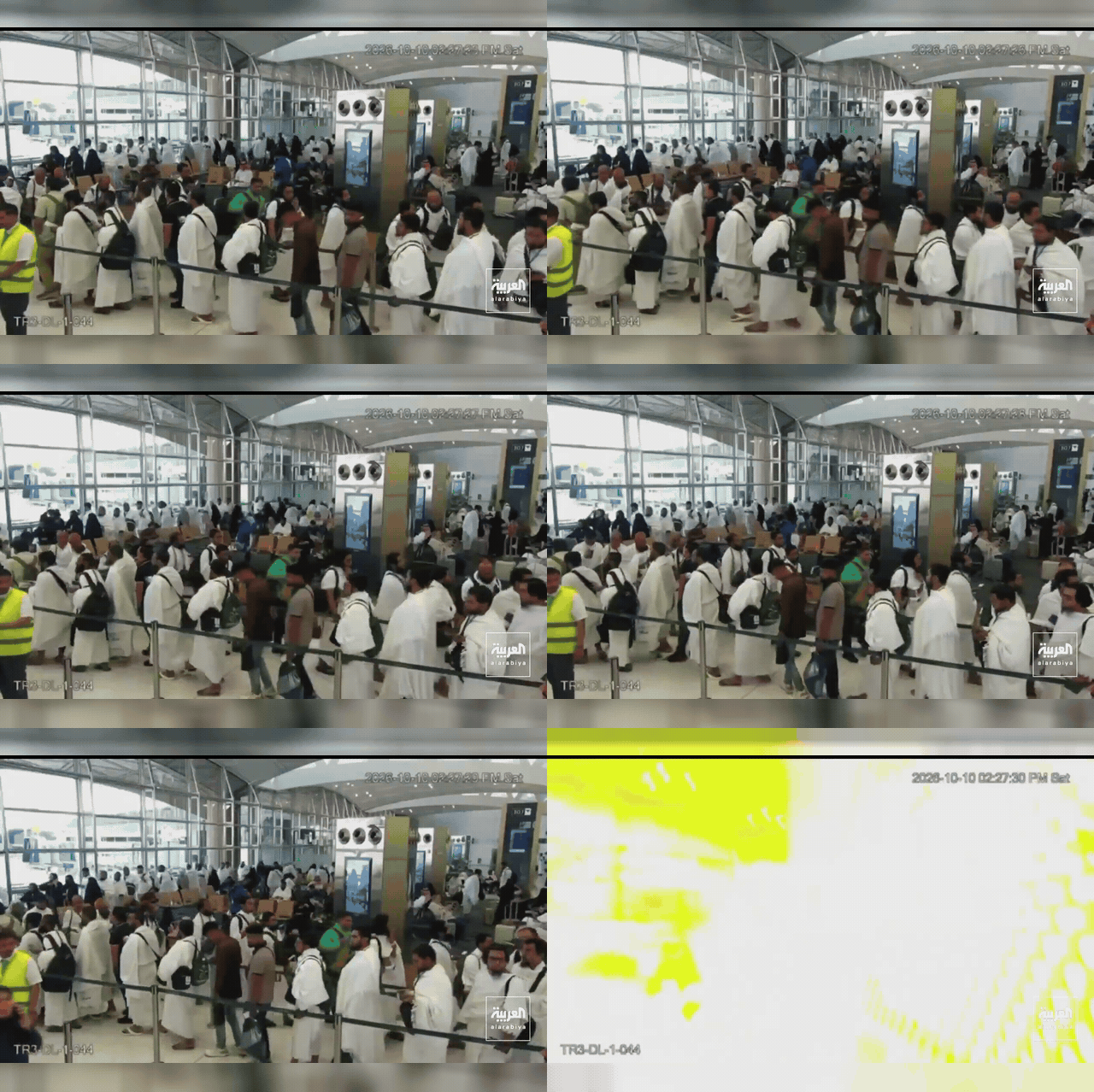
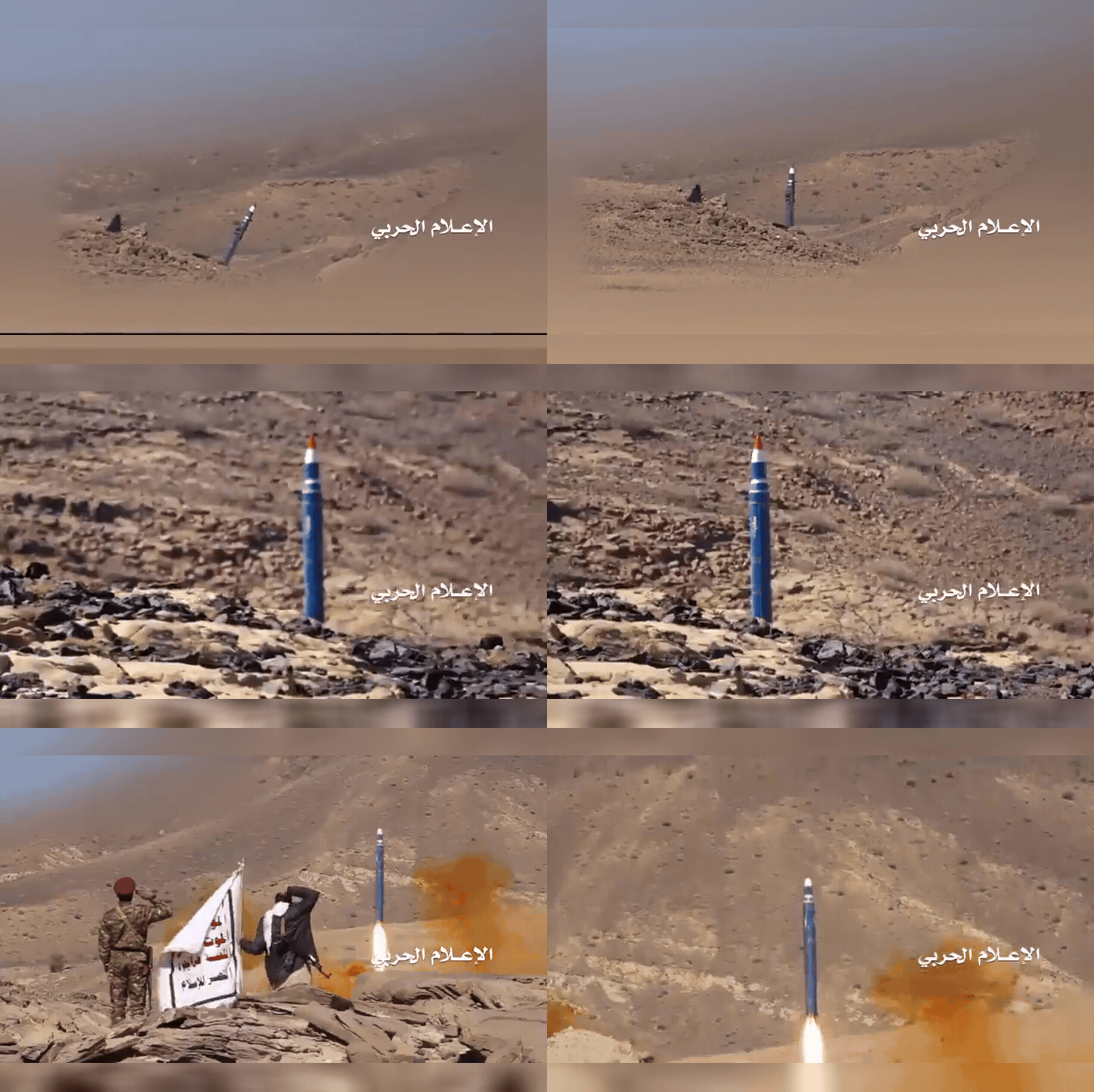
Umrah pilgrims at King Khalid International Airport, Riyadh. Houthi missile strikes have killed at least 18 people at the airport in the past week, with Saudi air defences unable to intercept every attack.A missile on rocky desert terrain in Yemen, of the kind the Houthi-linked cell test-fired before returning to Claude hours later to diagnose why it failed.
Houthi-linked fighters in northern Yemen used Anthropic's Claude AI coding tool as a substitute for human weapons engineers, running three simultaneous weapons programmes including a ballistic missile with a range goal of over 1,500 miles. Anthropic's September threat intelligence report confirmed the cell ran multiple Claude instances in parallel — one writing code, one researching, one reviewing — and test-fired a guided rocket before returning to Claude hours later to diagnose why it failed. The disclosure comes as Houthi missile strikes have killed at least 18 people at Riyadh's King Khalid International Airport in the past week, with Saudi air defences unable to intercept every attack.
Claude's built-in safeguards blocked many requests but allowed others through, as the cell spread its work across separate sessions so that no single conversation revealed the full extent of its intent.
The three programmes comprised a hypersonic glide vehicle variant, the R2000 missile set, and a guided rocket whose flight computer was a low-cost, phone-grade component with homing guidance.
Trump has said he is considering US strikes on Houthi-controlled territory, while the UK Foreign Office has advised against all but essential travel to Saudi Arabia's airports except Medina.