
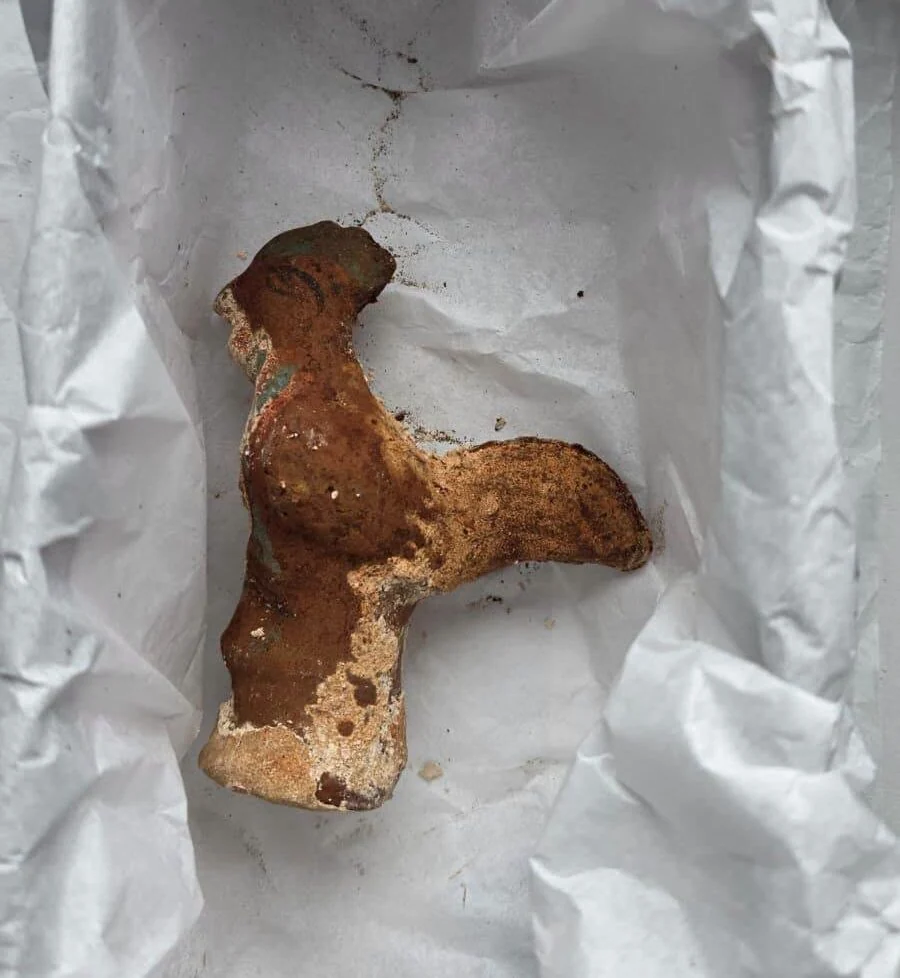
Archaeologists open a sealed 1,800-year-old Roman child's coffin in Romania and find a rooster rattle that STILL rattles
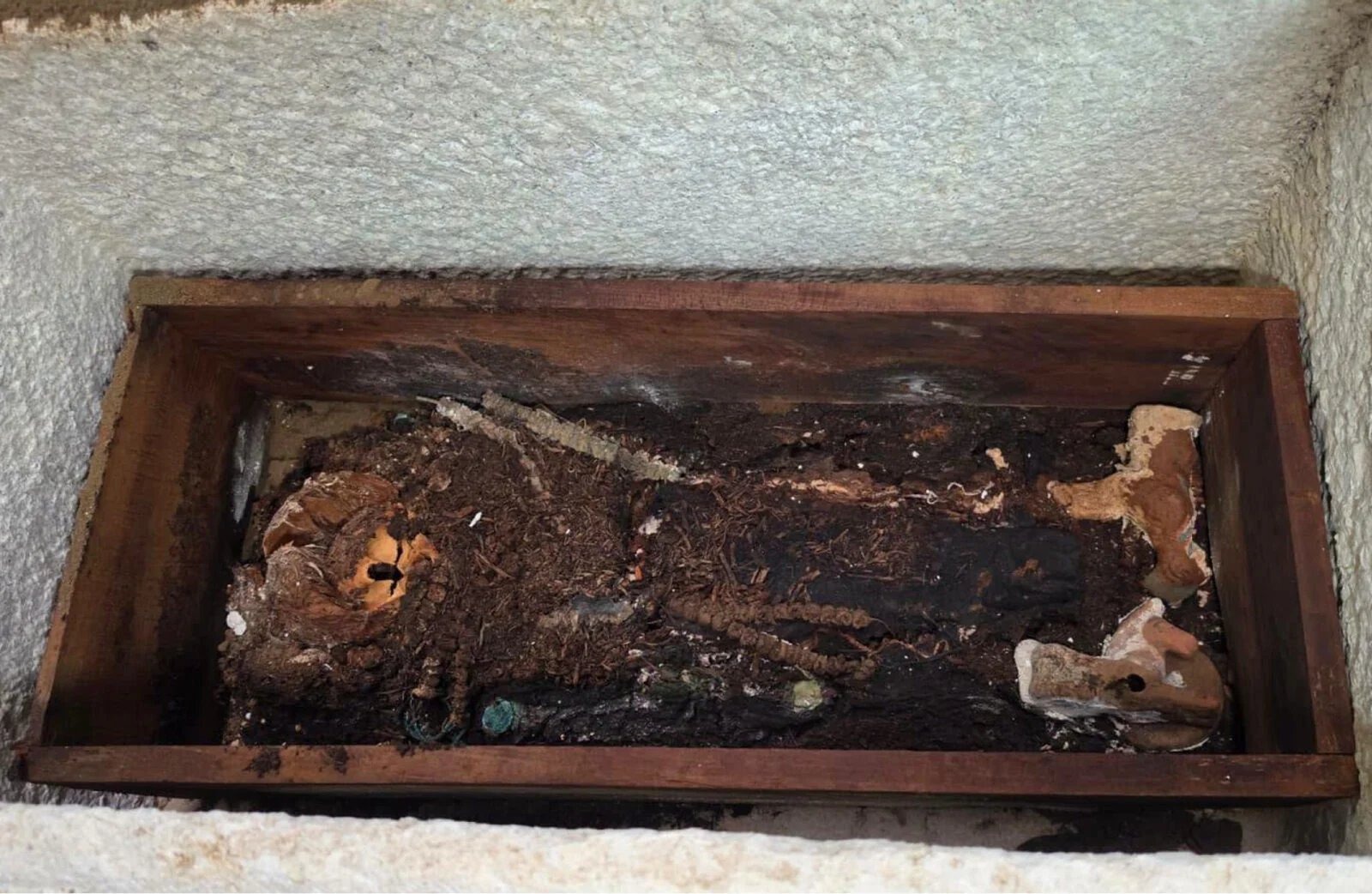
Archaeologists Constantin Băjenaru and Cătălin Nopcea opened the sarcophagus on 27 October, five days after it was unearthed during construction work in Constanța's Flămânda district on 22 October and transported intact to the Museum of National History and Archaeology. Inside the stone outer casing lay a remarkably well-preserved wooden coffin holding the skeletal remains of a very young child, believed to be a boy, along with flower garlands whose individual leaves had survived eighteen centuries undamaged. Băjenaru called the find 'exceptional and extremely rare,' noting that nothing like it had ever emerged from the site of ancient Tomis.
The second clay toy is a small wheeled horse; both toys still retain traces of original paint, including details of eyes and faces.
Two bulla pendants — Roman protective amulets traditionally worn by freeborn boys — and a coin were also placed in the grave, offering clues to the child's sex and status.
Archaeologist Ana Hamat compared the intact burial to the everyday-life glimpses preserved at Pompeii, while the museum claimed it was Europe's archaeological discovery of the moment.