Belgian-born physicist Francis Halzen, 82, wins Nobel Prize in Physics for turning Antarctic ice into a 'ghostly' neutrino detector
From the Newshound archive · first published 6 October 2026 · last updated 7 October 2026.
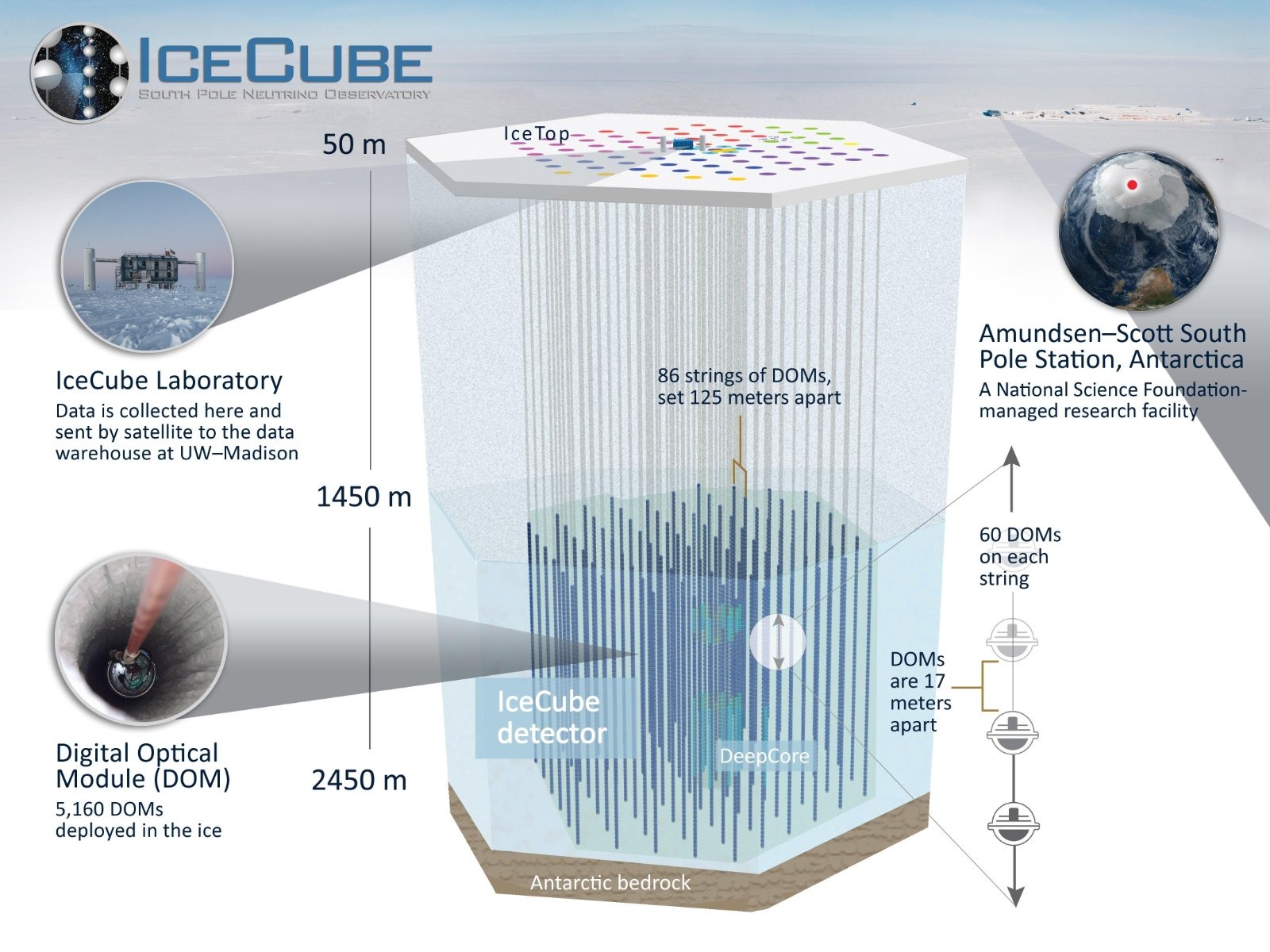
Francis Halzen, whose IceCube project uses a cubic kilometre of Antarctic ice to detect neutrinos, has won the 2026 Nobel Prize in Physics worth around £900,000.The IceCube Neutrino Observatory at the South Pole, where rare flashes of light in Antarctic ice point scientists toward violent events in distant galaxies ordinary telescopes cannot see.
Francis Halzen, a Belgian-born professor at the University of Wisconsin-Madison, has won the 2026 Nobel Prize in Physics for building a cosmic particle detector out of a cubic kilometre of Antarctic ice. The Royal Swedish Academy of Sciences awarded him the prize "for decisive contributions to the IceCube Neutrino Observatory and the discovery of high-energy neutrinos of astrophysical origin." Halzen said he was "surprised" by the win, called it "an adventure where success was not guaranteed," and paid tribute to the "courageous people" who believed in the project when no respectable conservative physicist would join him. The prize carries 12 million Swedish kronor — around £905,000.
Halzen first proposed using South Pole ice to trap neutrinos in the 1980s; the completed IceCube observatory buries thousands of light sensors between 1,450 and 2,450 metres beneath the Antarctic surface.
Nobel Committee chair Mark Pearce said Halzen's 'tenacity and scientific vision has paved the way for a new kind of astronomy.'
Halzen quipped that using neutrinos to communicate with aliens 'has been proposed by several friends of mine — but I don't think I will go there.'