
Egyptian farmer alerts authorities after spotting strange stone, leading to two colossal Ramses II statues buried for 3,000 years
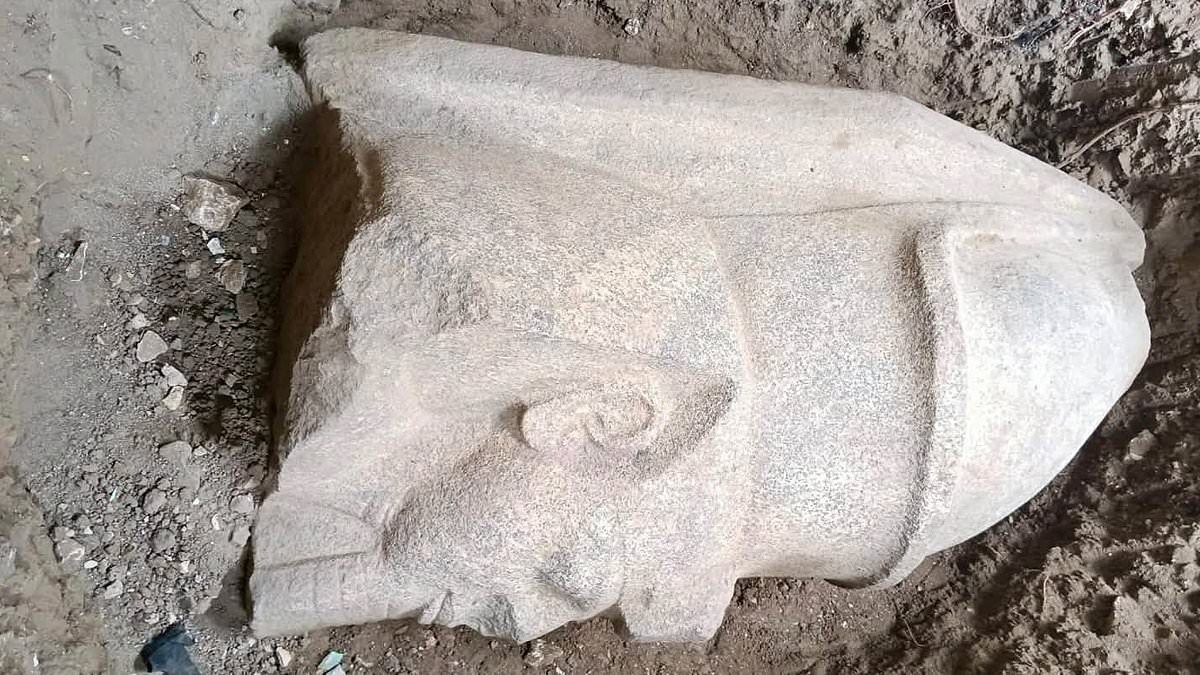
A farmer in Behbeit el-Hagar, a Nile Delta village roughly 60 miles north of Cairo, noticed an inscribed stone block in his field and reported it to antiquities inspectors, triggering rescue excavations that uncovered the remains of two massive royal statues of Ramses the Great. Egypt's Supreme Council of Antiquities confirmed one statue depicts Ramses II and believes the second does too, alongside a pink granite block covered in hieroglyphic royal titles. Officials praised the farmer's quick thinking as helping protect a crucial piece of Egypt's cultural heritage. Excavations at the site are continuing.
The most spectacular find is a 5ft 3in stone head of Ramses II wearing the double crown symbolising Egypt's unification, from a statue once estimated at 28ft tall.
A second statue, measuring around 8ft in its surviving section but missing its legs, retains remarkably well-preserved facial features despite its 3,000-year burial.
Hieroglyphic inscriptions on the recovered back pillar bear the pharaoh's Horus name, 'Hor-ka-nakht-mery-maat', definitively linking the statues to Ramses II's reign.