Huge 2,600-year-old Egyptian complex larger than a football field is spotted from space beneath the sacred city of Buto
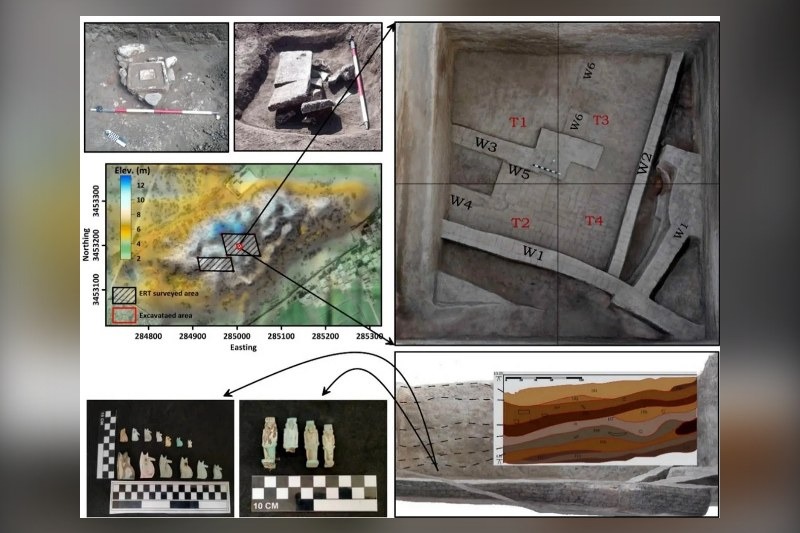
The subterranean complex beneath Buto's Kom C mound is believed by researchers to have served as a religious site, possibly connected to the worship of Wadjet, Egypt's cobra goddess.Findings from the trial excavation at Buto, Egypt, where a 100 square metre dig uncovered mudbrick structures and Egyptian and Roman debris confirming what satellites had detected below.
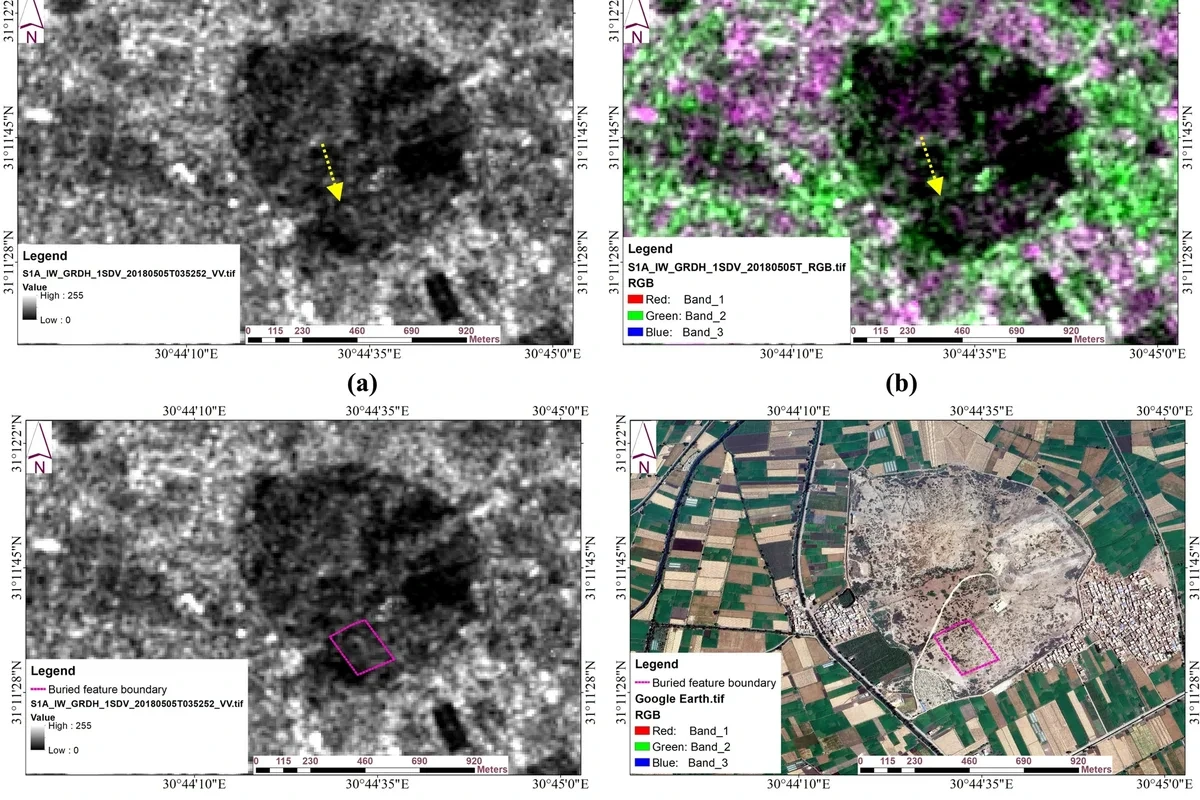
Researchers from Kafr El Sheikh University and Durham University identified the vast oval structure — 420 feet long and 203 feet wide — buried three to six metres beneath one of Buto's three major mounds, using the European Space Agency's Sentinel-1 radar satellite and electrical resistivity tomography.
Buto was a sacred Lower Egyptian city dedicated to Wadjet, the cobra goddess and protector of Egypt's rulers, occupied from around 3800 BC to the 7th century AD.
A smaller mudbrick structure possibly dating to 688 BC was also found closer to the surface, alongside layers of Egyptian and Roman debris.
The researchers say the find proves combining satellite radar with geophysical measurements gives 'a very accurate vision in detecting buried settlements in a complex region.'