
Middle East oil flow nearly recovers to pre-war levels despite Iran still targeting ships in Hormuz
From the Newshound archive · first published 2 October 2026.
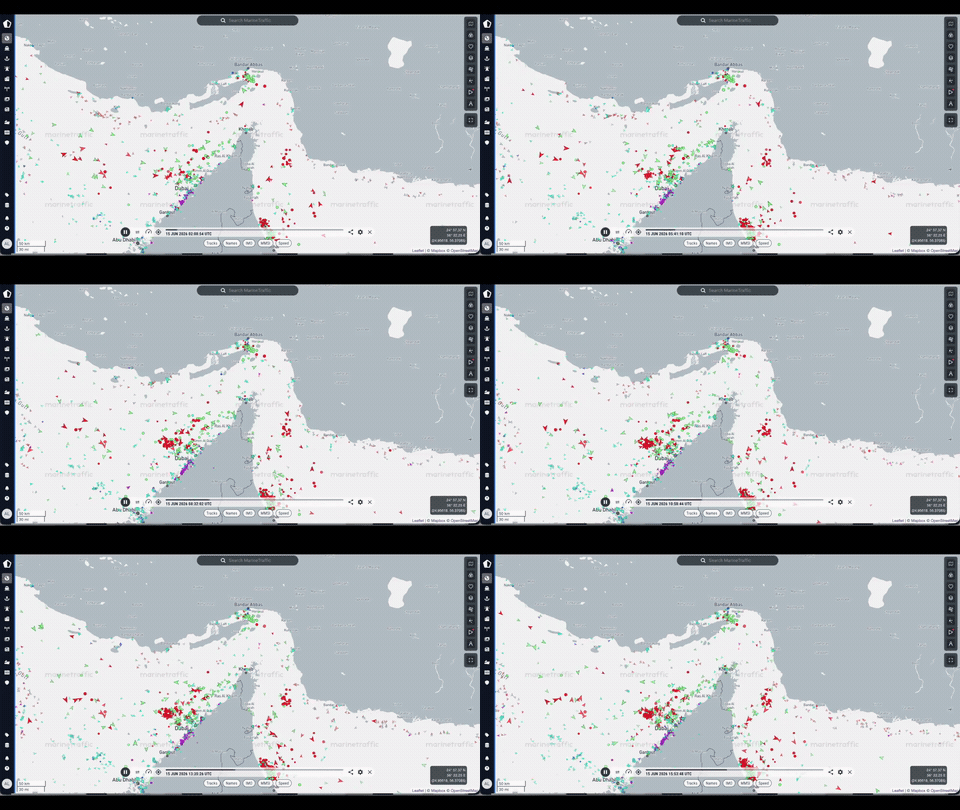
Oil exports from the Middle East climbed to 92% of their pre-war level in the final week of September, even as Iran presses on with attacks on commercial vessels transiting the Strait of Hormuz. Three factors are credited for the recovery: US military air support for vessels, a sharp shift to overland pipeline routes, and rerouted tanker traffic — though the recovery is reportedly fragile and the oil market does not expect the current position to hold.
Overland pipelines to Red Sea and Gulf of Oman ports now carry about 40% of Middle East oil exports, bypassing Hormuz entirely, compared with 17% before the war.
Iranian strikes on commercial shipping in September were the most numerous since March, with vessels on the US-recommended southern route continuing to draw the most attacks.
OPEC+ has reportedly delayed an oil capacity review after the Iran war disrupted member states' expansion plans, adding further uncertainty to supply.