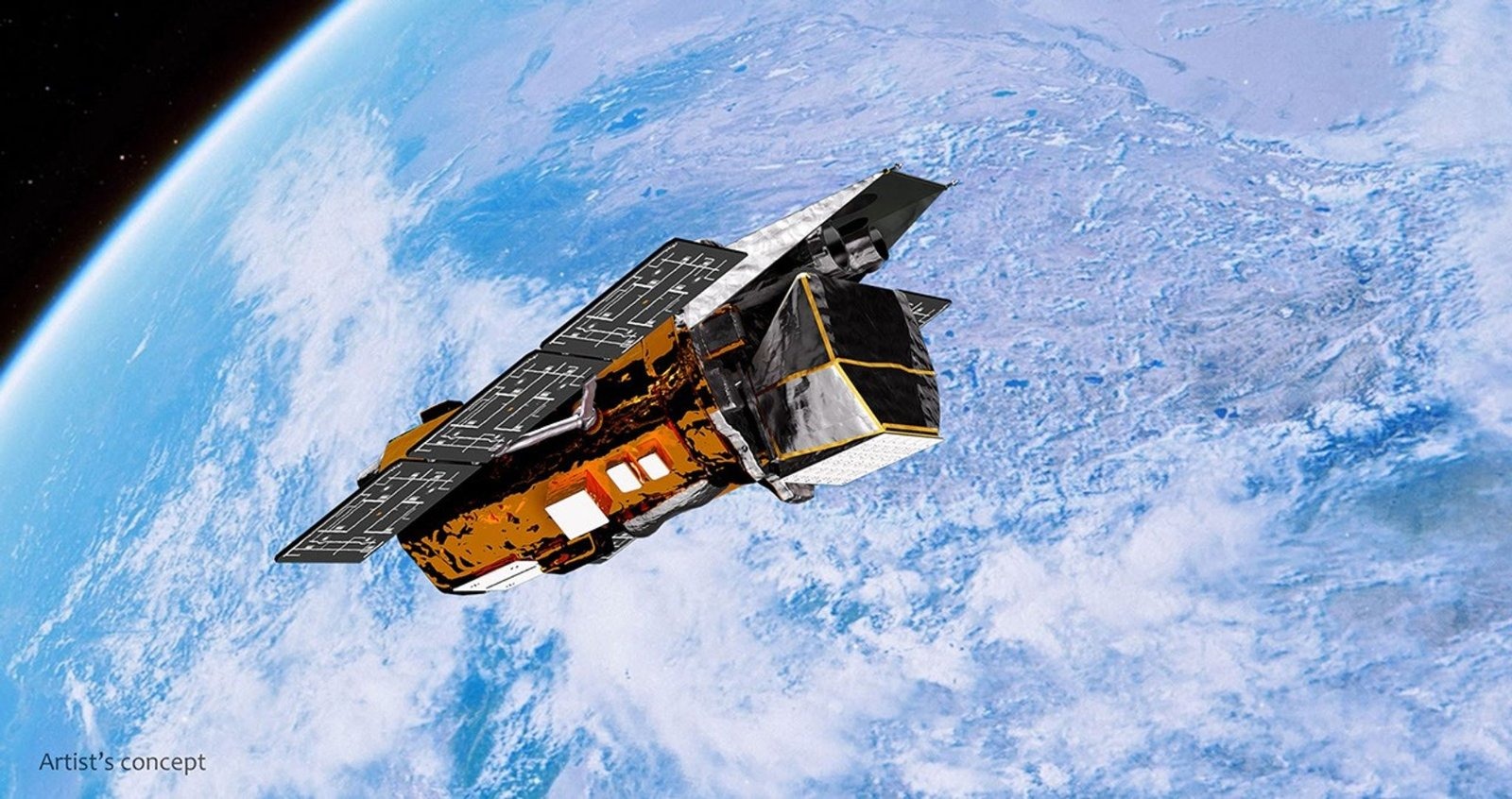
Nasa's 3,200lb Swift telescope is expected to crash back to Earth around Friday after a failed robot rescue mission
NASA's Swift telescope logged more than 2,000 gamma-ray bursts across 22 years before orbital decay forced controllers to shut it down, with dense components now expected to survive reentry and reach Earth's surface around Friday.
Most of the 1.5-tonne Swift Observatory is expected to burn up on reentry, but dense tungsten components and mirror fragments could survive the plunge and reach Earth's surface. NASA mission chief scientist Brad Cenko confirmed the risk, with parts of Africa, Australia, India, Southeast Asia and Central and South America all inside the potential debris zone.
Swift logged over 2,000 gamma-ray bursts and 1,400 exploding stars across 22 years before orbital decay forced controllers to shut it down in late October.
A rescue robot called Link, built by Katalyst Space, launched in July but suffered technical problems and never got closer than 7 to 9 miles from the telescope before falling back to Earth itself in September.
Astronomer John Nousek, who led Swift's control team, said: 'What goes up must come down. And that end is catastrophic.'