
NASA targets mysterious moon pit that could open into a vast underground cave to shelter future astronauts
From the Newshound archive · first published 6 October 2026.
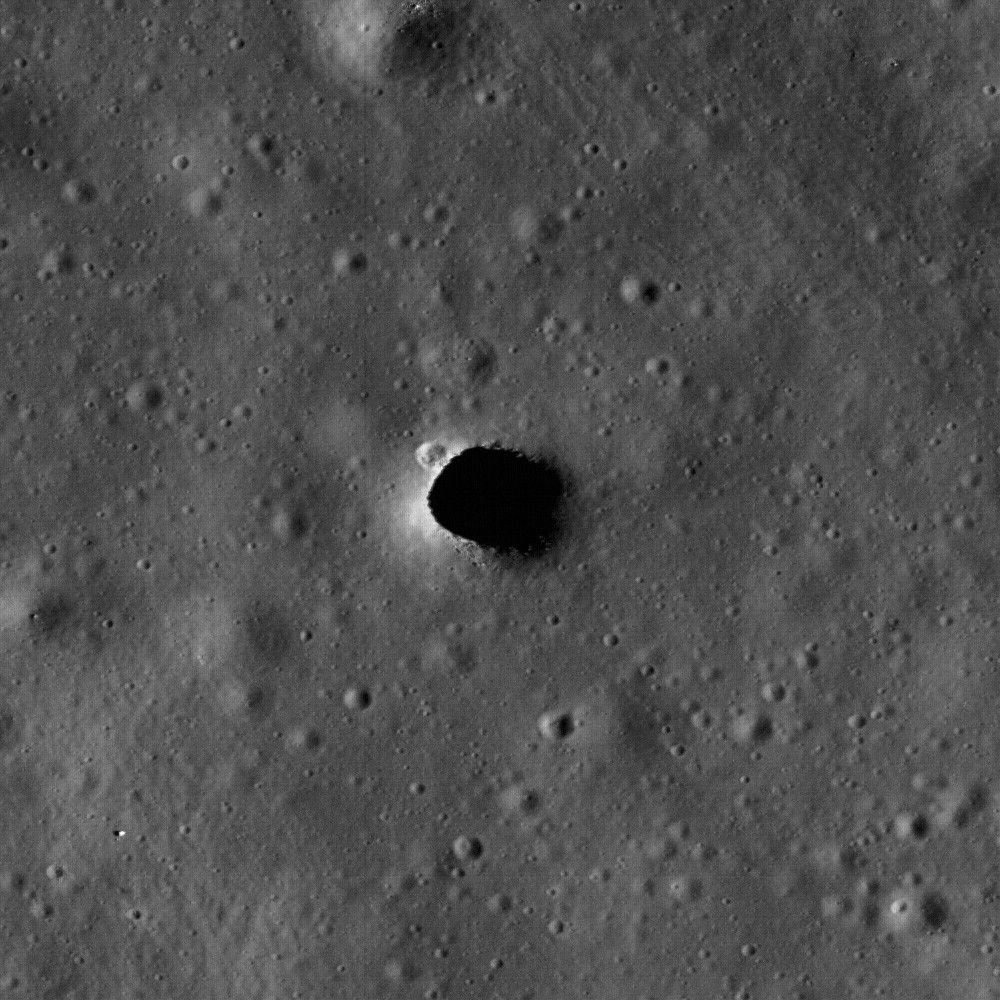
NASA has selected the Planetary Science Institute to lead the GIMLI project, which will investigate whether the Marius Hills Pit on the lunar surface opens into a cavern large enough to shield astronauts from radiation and extreme temperature swings. Comparable in area to an American football field and plunging as deep as a 10-storey building, the pit was first identified by Japan's SELENE spacecraft in 2009. Scientists think it may be one of roughly 300 lunar pits that could act as entrances to ancient volcanic caves.
GIMLI will use ground-penetrating radar, seismic sensors and gravity-measuring instruments, built by Honeybee Robotics, to examine what lies beneath the surface.
The lava-flow layers exposed across the broader Marius Hills region could also shed light on how volcanic activity shaped the moon's interior over millions of years.
PSI director Amanda Hendrix described GIMLI as 'the type of ambitious planetary science that PSI was built to pursue', with Norway's space agency joining as a mission partner.