
Oil prices slip as Gulf exports rise to 81% of pre-war levels, despite ongoing ship attacks and soaring sailor bonuses
From the Newshound archive · first published 6 October 2026.
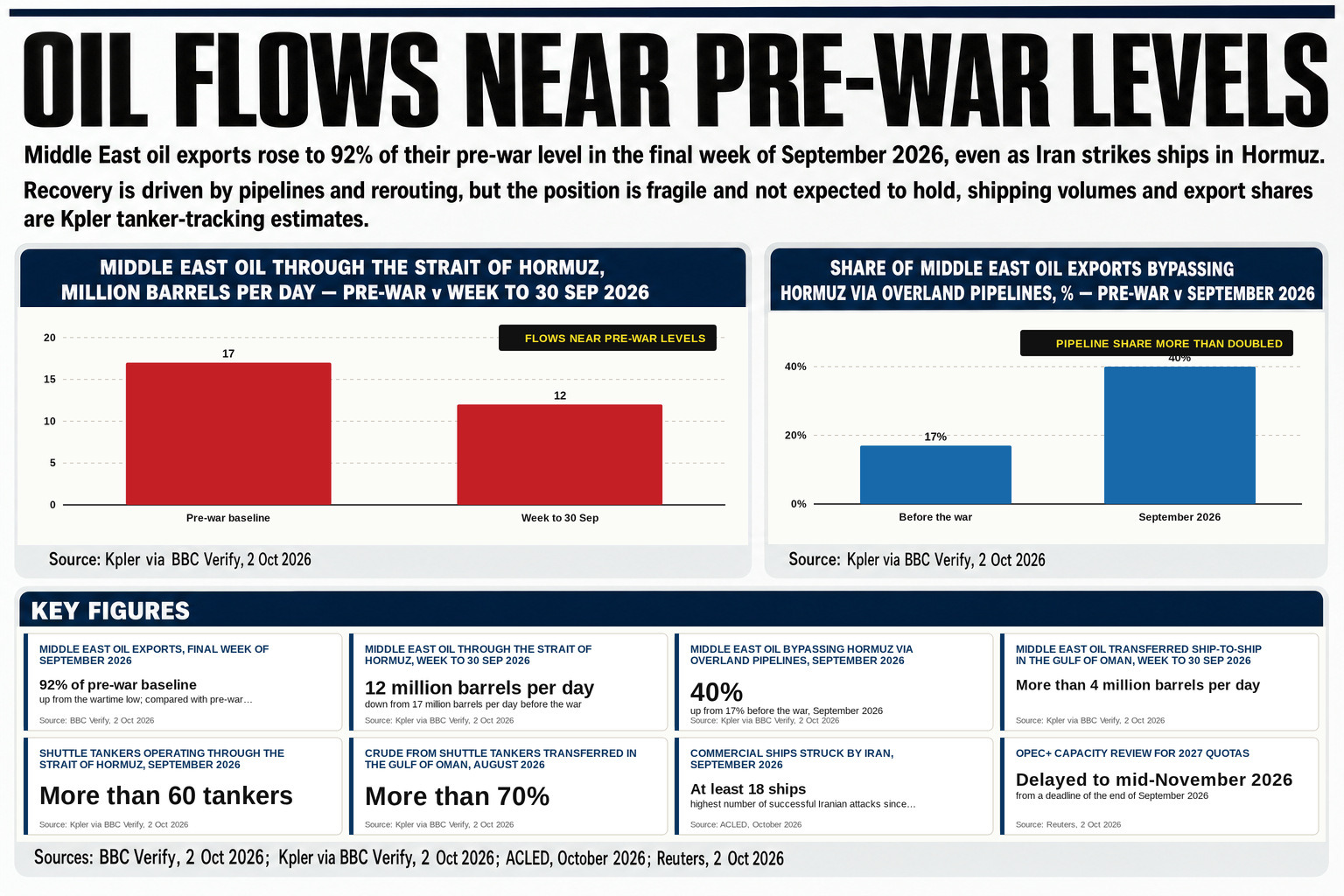
Crude exports through the Strait of Hormuz climbed to an average of 81% of pre-war levels in September — with traders now weighing that stronger flow against continuing dangers in the waterway, pushing Brent crude down to $100.74 a barrel on Monday. The recovery is coming at extraordinary human and financial cost, with producers paying up to $40 million per voyage to move trapped oil and offering sailors two to three times their normal monthly salary to brave drone strikes and missile attacks. The export rebound and its effect on prices emerged as the dominant market story of the day, after nine vessels were struck in the space of two weeks.
In the space of just two weeks, attacks on commercial shipping near the strait left two sailors injured and one dead, with nine vessels struck in total.
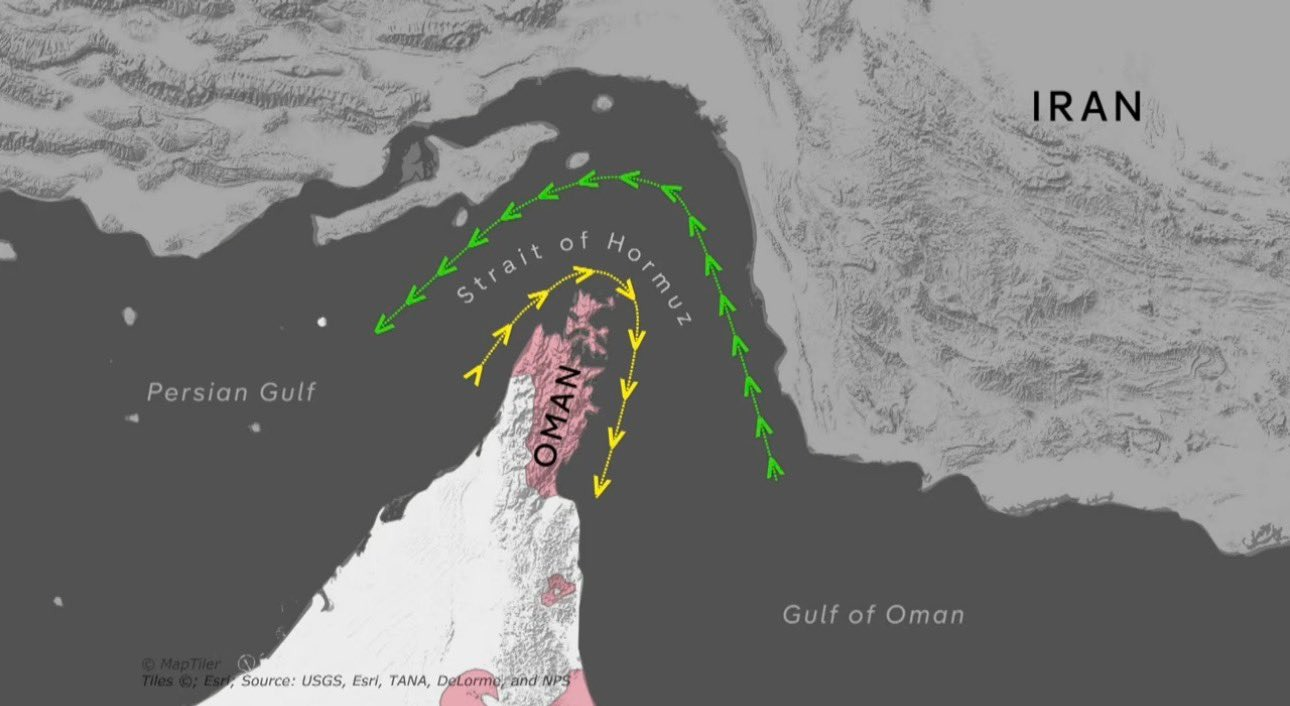
Producers are running "shuttle runs" — supertankers dash through the strait, load at port, exit and transfer oil to waiting vessels outside — swallowing record freight costs rather than leave oil stranded.
By late September, chartering an oil supertanker to China had risen sharply since the war began, with daily rates topping $1.2 million.