
Pompeii cupboard sealed for almost 2,000 years reveals childhood amulets and 38 coins its owners left behind as Vesuvius erupted
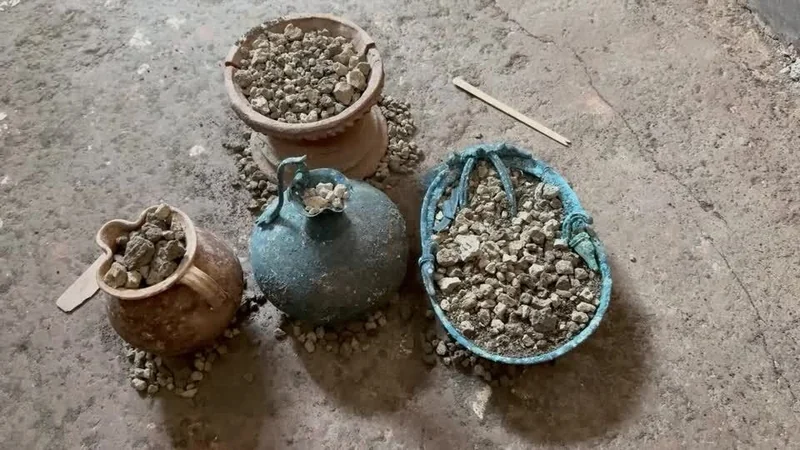
Archaeologists have reconstructed a wooden cupboard from traces found in house IX 11, 7 — tentatively linked to a Cornelius Maximus — on Via dell'Abbondanza, one of ancient Pompeii's busiest streets, uncovering a vivid portrait of one resident's daily existence frozen at the moment of disaster. The fact that both coins and sentimental objects were left untouched suggests the owners fled with no time to retrieve them when Vesuvius erupted in AD 79.
The cupboard also held tweezers, a spatula for mixing pigments, a glass perfume bottle, an incense burner, a bronze lamp, and lead weights suggesting the household was involved in trade.
The necklace of at least 24 tiny charms — known as a crepundia — was given to Roman children as a protective amulet and rattle, but was sometimes kept into adulthood as a childhood memento.
Site director Gabriel Zuchtriegel said: 'Pompeii is not just a place of great works of art — it is also a place where the most ordinary' lives can be traced.