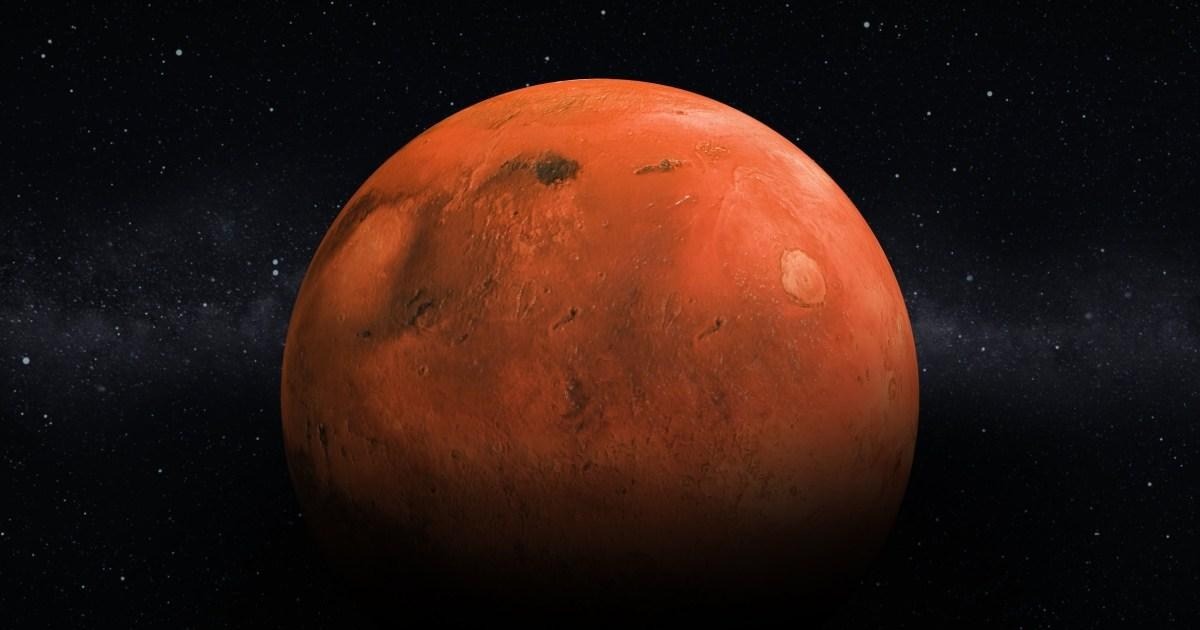
Pungent gas seeping from cracks on a Mars volcano suggests the red planet is 'merely sleeping' and could harbour life
The hydrogen chloride emissions above Alba Mons's fissures were recorded by the European Space Agency's ExoMars Trace Gas Orbiter, the satellite whose data underpins Professor Daniel Mège's study.
Scientists have detected hydrogen chloride gas seeping from fresh fissures on the flanks of Alba Mons, a volcano in Mars' northern hemisphere, in concentrations that cannot be explained by the planet's dust or water cycles. The study, published in Science Advances, was led by Professor Daniel Mège of Poland's Academy of Sciences and uses data from the European Space Agency's ExoMars Trace Gas Orbiter.
The gas appeared consistently above the volcanic fissures during early summer — exactly when seasonal models predict it should vanish.
Mège says hydrothermal systems active beneath the surface 'could contain the ingredients and energy needed for microorganisms to develop.'
Home to the solar system's biggest volcanoes, Mars has nonetheless never been observed erupting directly — which makes this finding the closest thing yet to a 'smoking gun' of ongoing activity.