
Scientists find fossilised 'red blood cells' in the bone of a 115-million-year-old dinosaur from Brazil in a world first
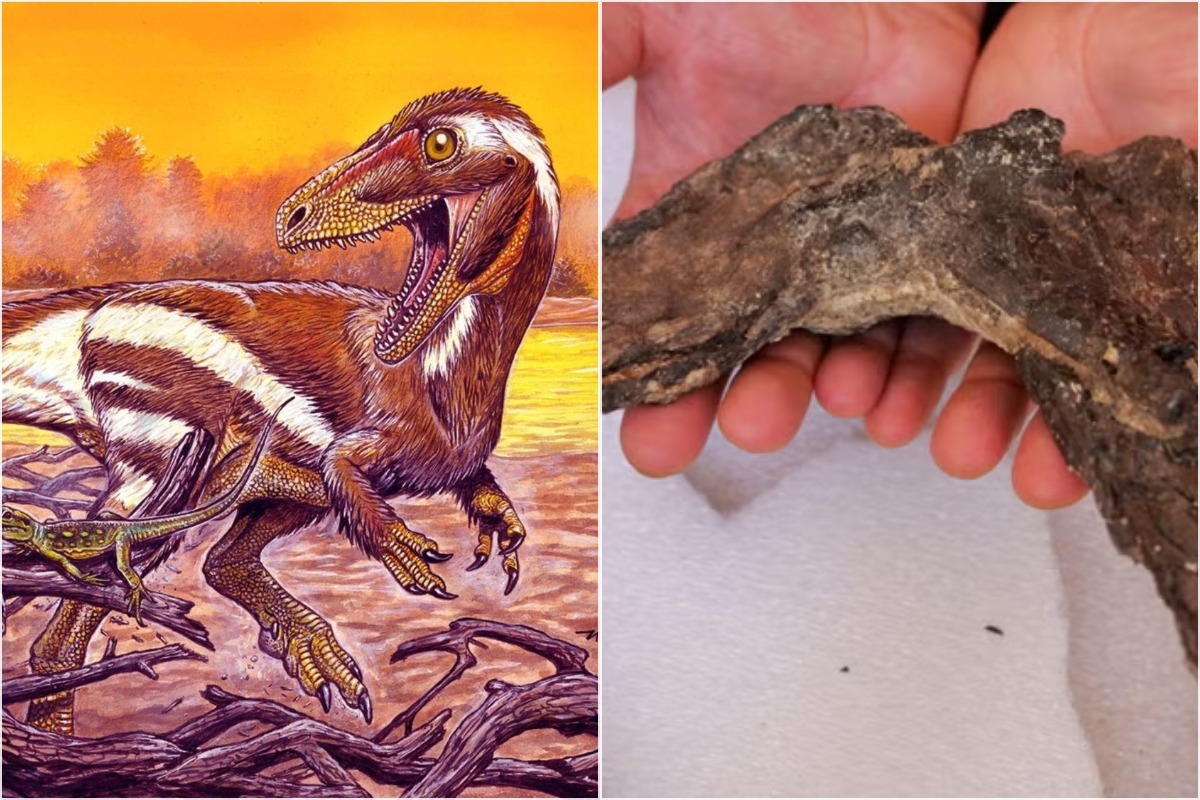
Scientists identified the creature as an Aratasaurus museunacionali — a small carnivorous theropod of around 34kg — which was discovered in a Brazilian gypsum mine in 2008, with its leg bones subsequently analysed by Professor Kliti Grice's team at Curtin University in Australia. Chemical analysis detected heme, the iron-containing molecule responsible for haemoglobin's oxygen-carrying capacity, within ellipsoidal structures in the bone's vascular canals, marking the first chemically confirmed evidence of its kind inside a fossil blood cell on Earth.
The carcass came to rest on coastal microbial mats and was swiftly covered in low-oxygen conditions, with the mineral hausmannite serving as a natural time capsule preserving the remains.
Grice's team emphasise that no DNA was recovered, ruling out any Jurassic Park-style cloning: 'We have not found dinosaur DNA or a dinosaur genome.'
Researchers say the discovery could shed light on how blood evolved, and that comparable preserved biological traces might be found beyond our planet.