Scottish detectorist Mariusz Stepien unearths his second Bronze Age hoard just seven miles from the first
From the Newshound archive · first published 7 October 2026 · last updated 8 October 2026.
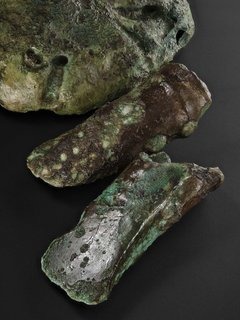
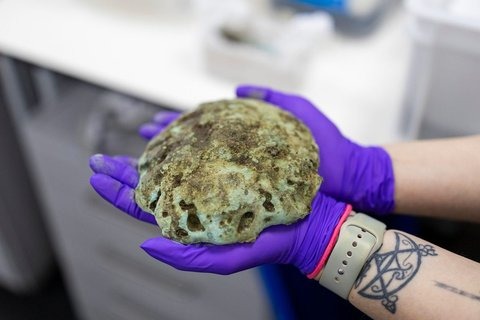
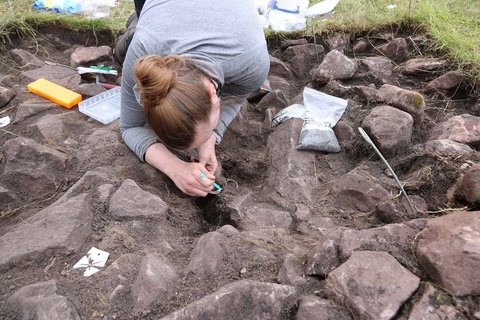
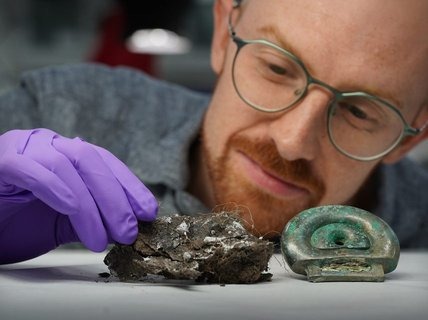
Three clay moulds from the Blyth Hoard, dated to approximately 1150–800BC, which may have been used to cast bronze fittings recovered from Mariusz Stepien's earlier Peebles Hoard find.The Blyth copper ingot — the first ever recorded in Scotland — which scientists hope will establish where the metal in both hoards originated, potentially shedding light on Bronze Age trade networks.The Blyth Hoard under excavation; National Museums Scotland archaeologists who dug out the site also discovered an ancient stone cairn during the recovery of the Bronze Age collection.A man in purple gloves examines pieces from the Blyth Hoard, which Dr Matthew Knight of National Museums Scotland described as a "special find in its own right.
Mariusz Stepien has uncovered a second Bronze Age hoard in the Scottish Borders, only seven miles from his 2020 discovery of the Peebles Hoard. Excavated in 2022 and now confirmed by National Museums Scotland, the Blyth Hoard includes 3,000-year-old bronze axe-heads, clay moulds and Scotland's FIRST-EVER complete copper ingot. Experts believe the moulds may have been used to cast fittings that turned up in the Peebles Hoard, suggesting the two sites are connected. The objects have been taken to the National Museums Collection Centre in Edinburgh for conservation.
Dr Matthew Knight of National Museums Scotland called it 'really incredible', saying mould materials this old 'rarely survive at all.'
Analysis of the copper ingot — a first for Scotland — could reveal where Bronze Age craftsmen sourced their metal 3,000 years ago.