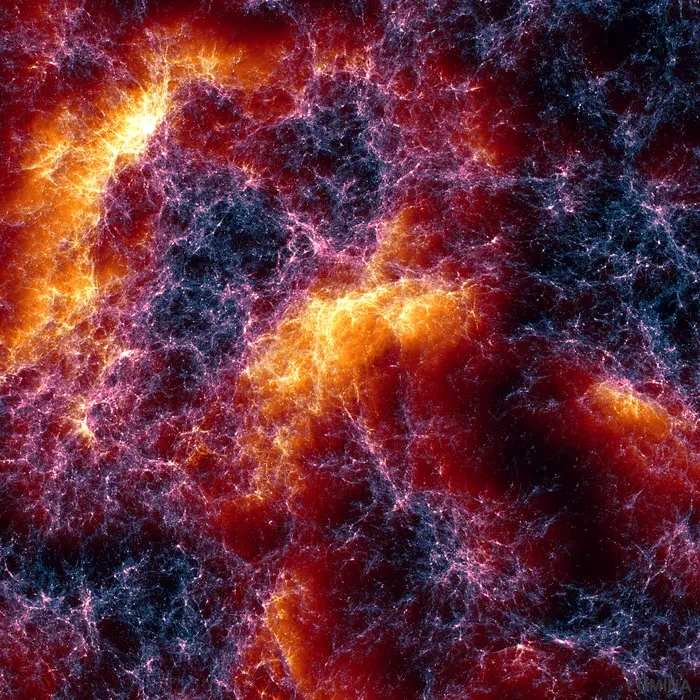
Supercomputer simulation called Lumina recreates the first two billion years of the universe after the Big Bang
Scientists at the Harvard-Smithsonian Center for Astrophysics built Lumina to trace how matter, dark matter and radiation interacted as the first galaxies formed — the first simulation to show helium shifting into its…
Scientists at the Harvard-Smithsonian Center for Astrophysics built Lumina to trace how matter, dark matter and radiation interacted as the first galaxies formed. Its renderings show fine filaments of dark matter weaving with fast-moving gas to sculpt the earliest cosmic structures. One image spans a region about 650 million light-years across. Researchers can also chart how gases like helium changed into their modern state.
Lumina is the first simulation to show helium reionisation, the gas shifting into its modern form.
Physicist Dr Aaron Smith, of the University of Texas at Dallas, co-authored the paper.
'We feel incredibly fortunate to be building simulations like Lumina,' Dr Smith said.