
Venus may have swallowed its own ancient moon, with its own slow spin dooming any satellite to destruction, study finds
From the Newshound archive · first published 19 September 2026.
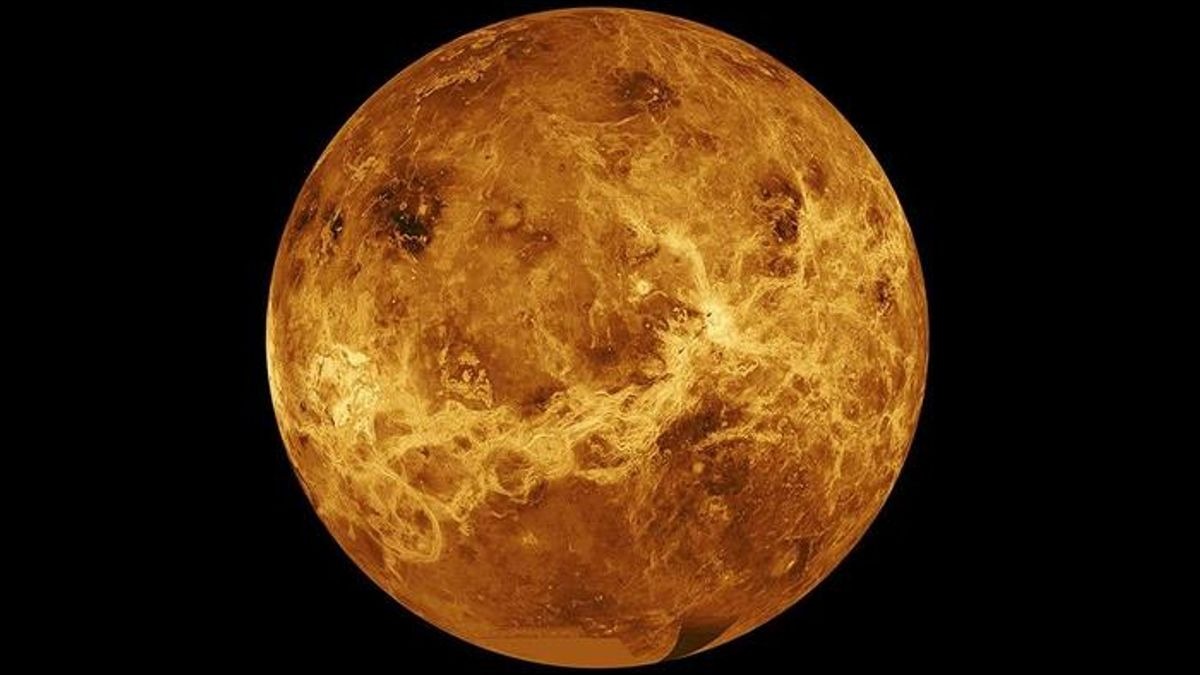
A new study published in The Astrophysical Journal suggests Venus once had a moon but its extraordinarily slow rotation — one full spin every 243 Earth days — meant tidal forces would have pulled any satellite inward rather than pushing it away. UC Riverside astrophysicist Stephen Kane ran computer simulations across a wide range of moon masses and initial spin speeds, and found virtually every scenario ended the same way: the moon spiralling toward Venus until it was torn apart and consumed. Kane said he was shocked to find no escape route across his entire range of simulations, having expected varied outcomes.
Unlike Earth's Moon, which drifts outward four centimetres a year because Earth spins fast enough to transfer energy outward, a Venusian moon would have received no such push.
Depending on Venus's starting rotation rate and the moon's mass, simulations indicate the satellite could have endured between 30 million and 1.7 billion years before being destroyed.
The debris from the collision could have crashed onto Venus, potentially reshaping its surface, atmosphere and ability to retain water — with implications for understanding moonless Venus-like planets across the galaxy.