Working households face a £1,050 income hit in the worst decade on record after Healey's 'scattergun' Budget
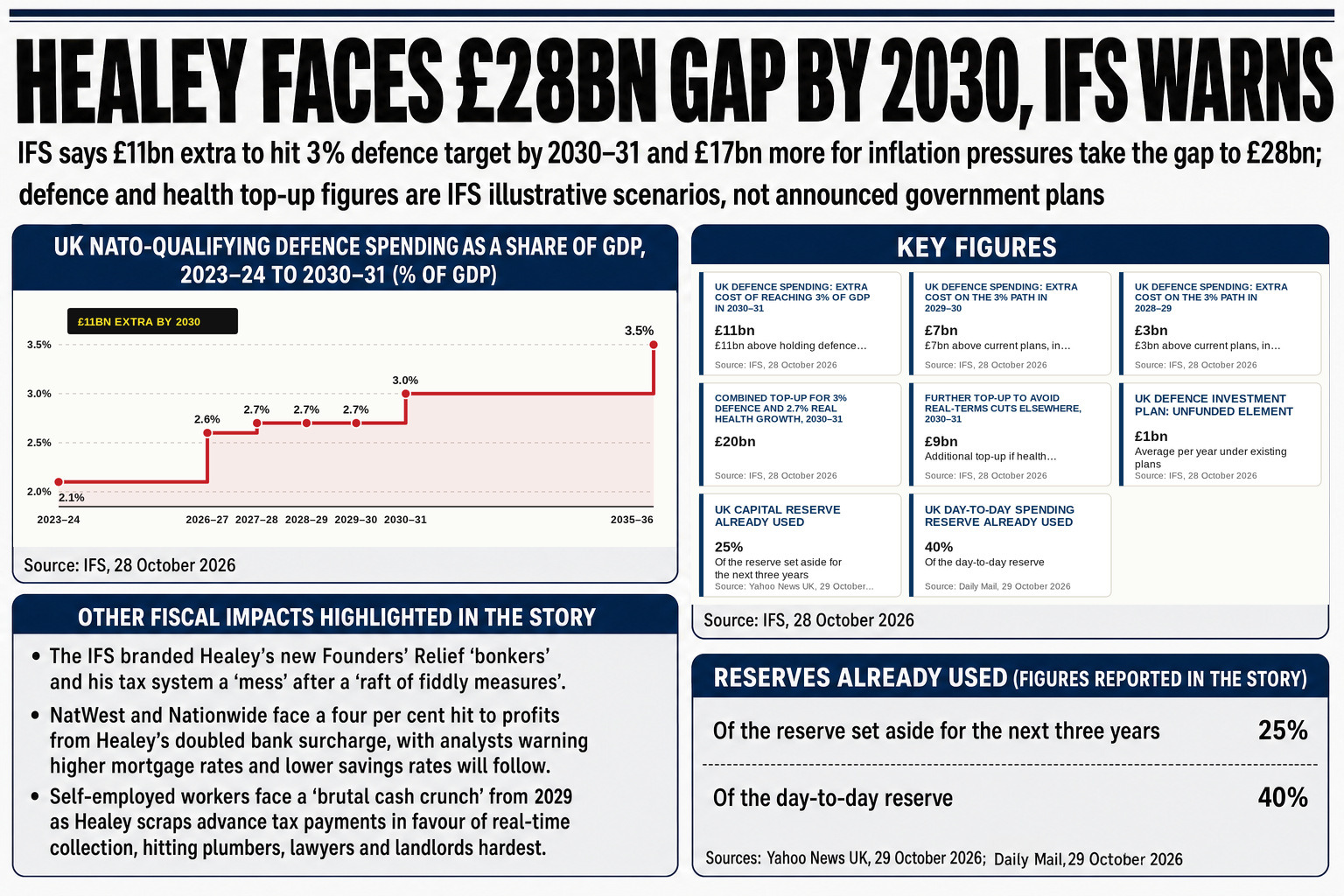
Sophy Ridge questions Andy Burnham on screen, as the OBR projects net migration rising from 120,000 this year to 230,000 annually by mid-2031.The IFS warns John Healey has burned through 40 per cent of his day-to-day reserve, leaving a £28bn gap to close through cuts, tax hikes or borrowing by 2030.
Working households are set to lose £1,050 in disposable income, a 3% drop by 2029, according to the Resolution Foundation, which also found that energy bills will remain higher in real terms than they were during the 2022 crisis — even accounting for Healey's £100 support payment. The IFS separately cautioned that household income growth across the 2020s is on track to be the most sluggish of any decade since records began, amounting to just 2% over the full ten years.
The Budget's cost of living assistance is so poorly focused that households in the wealthier half receive an average of £144 — only £14 short of the £158 that goes to those in the poorest half.
Treasury select committee chair Meg Hillier has written to the FCA calling for an investigation into whether a Bloomberg story, published an hour before the Budget, amounted to an improper leak of inside information, after bank share prices moved on its publication.
Former IFS director Paul Johnson described the Budget as 'myopia on steroids', cautioning that the chancellor's figures hold together only on the strength of 'fanciful' plans to cut unprotected departments from 2028 — projections the OBR has already acknowledged are out of date.